Showcased at Transpotec Logitec 2026: Scania and Gruber Logistics launch first hydrogen truck operations in Italy
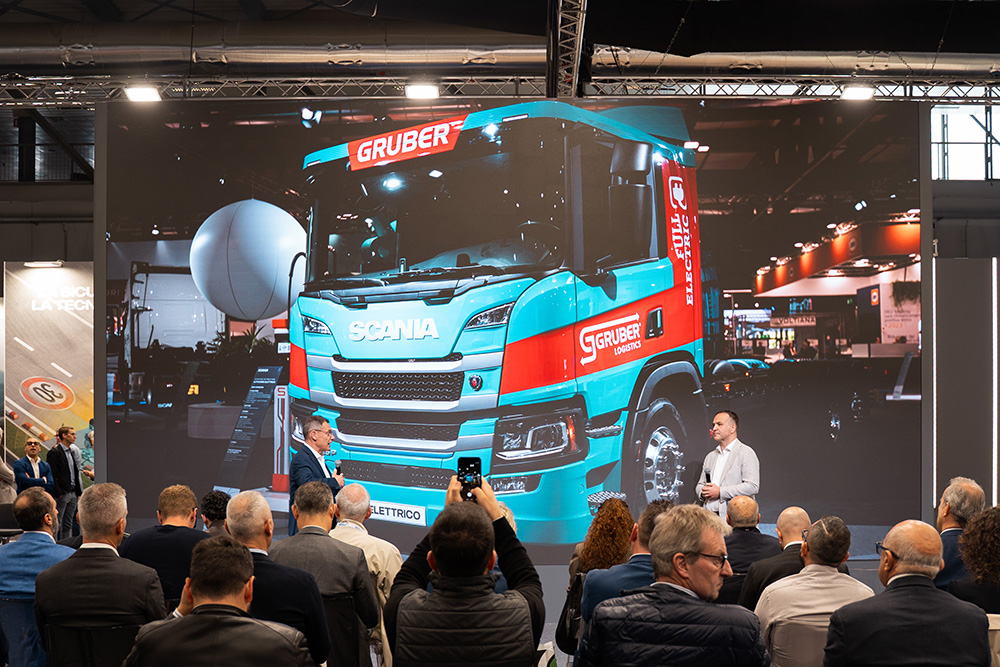
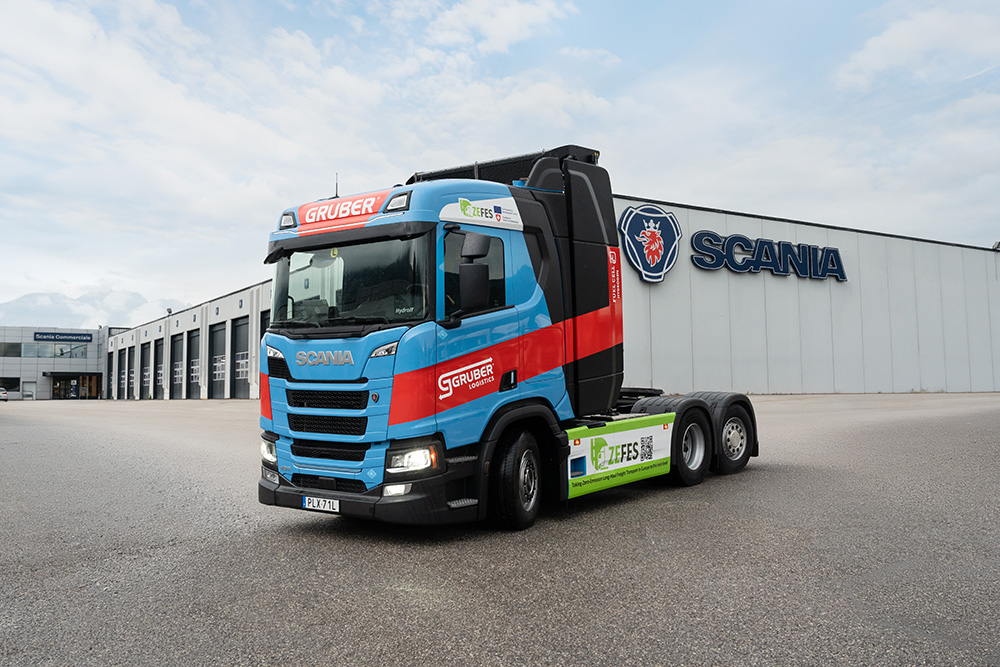
A major milestone has been achieved in the deployment of hydrogen-powered heavy-duty vehicles in Europe, as Scania and Gruber Logistics have presented the Scania 40 R Fuel Cell hydrogen truck at Transpotec Logitec Milan, on May 14th, 2026.
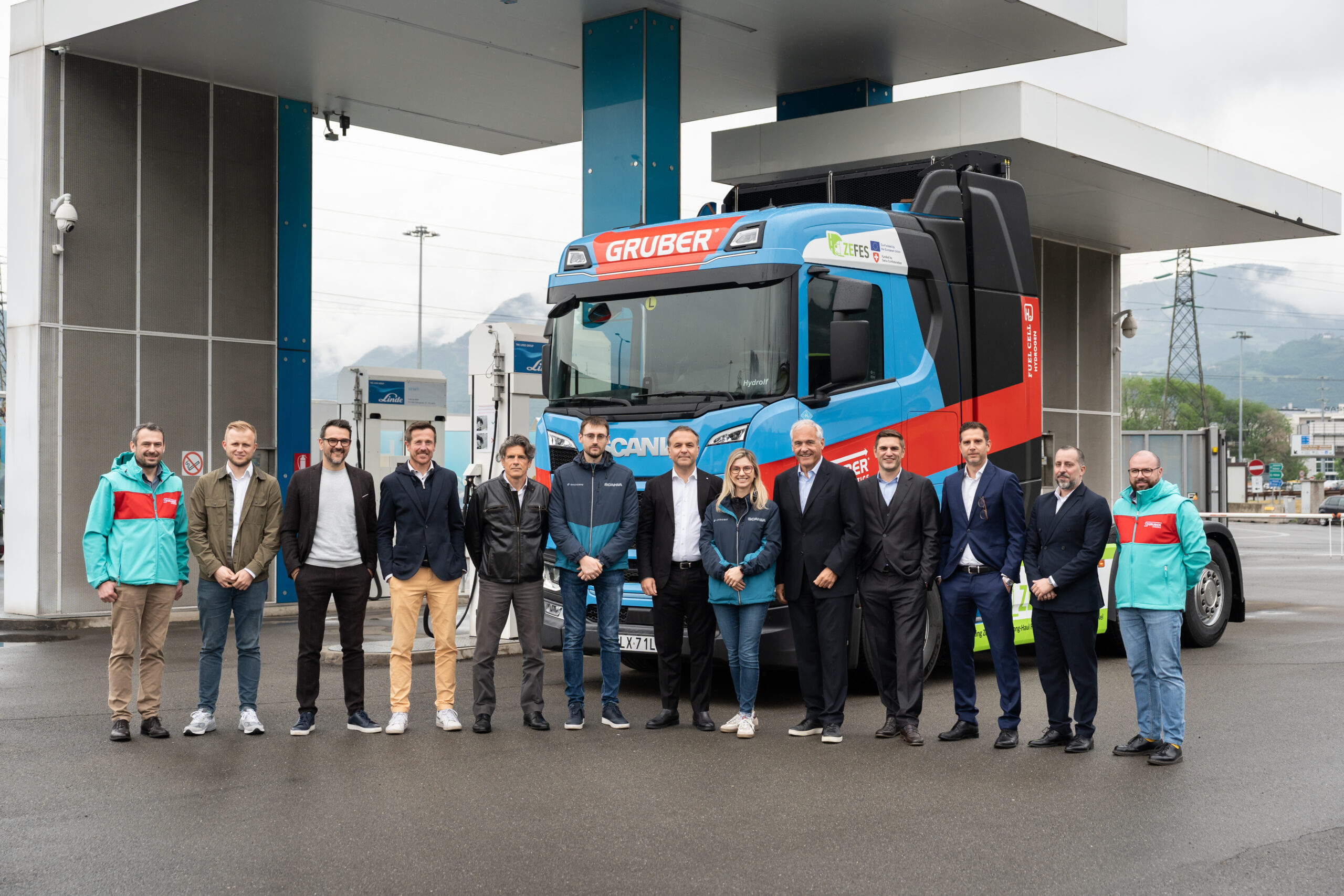
From prototype to real-world operations
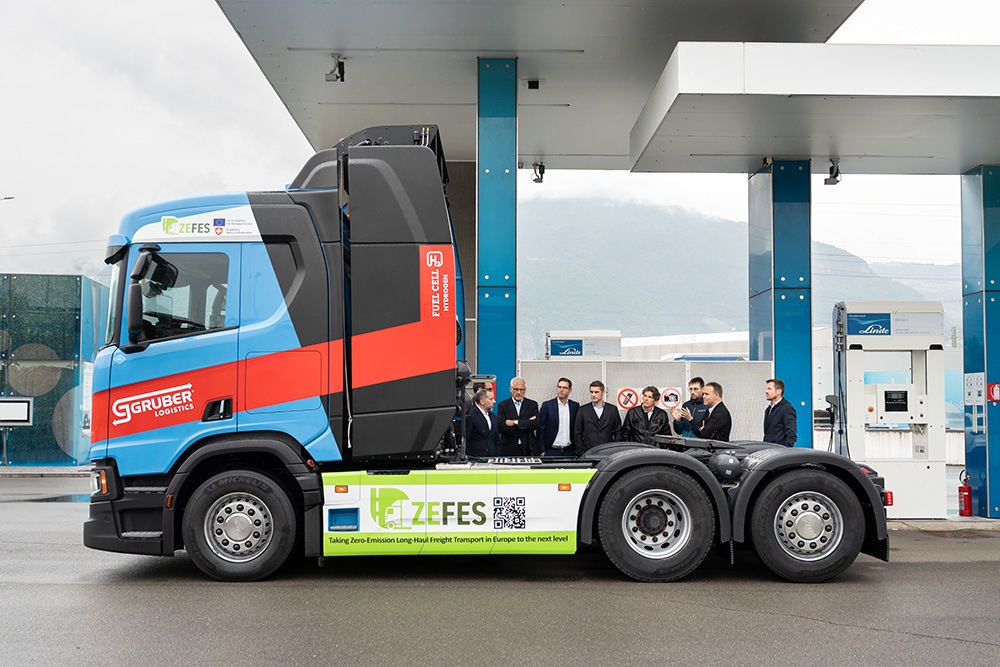
Deployed under the EU-funded ZEFES project, the Scania 40 R fuel cell electric vehicle is now fully validated following its testing phase and has officially entered commercial operations with Gruber Logistics in Bolzano (IT) in May.
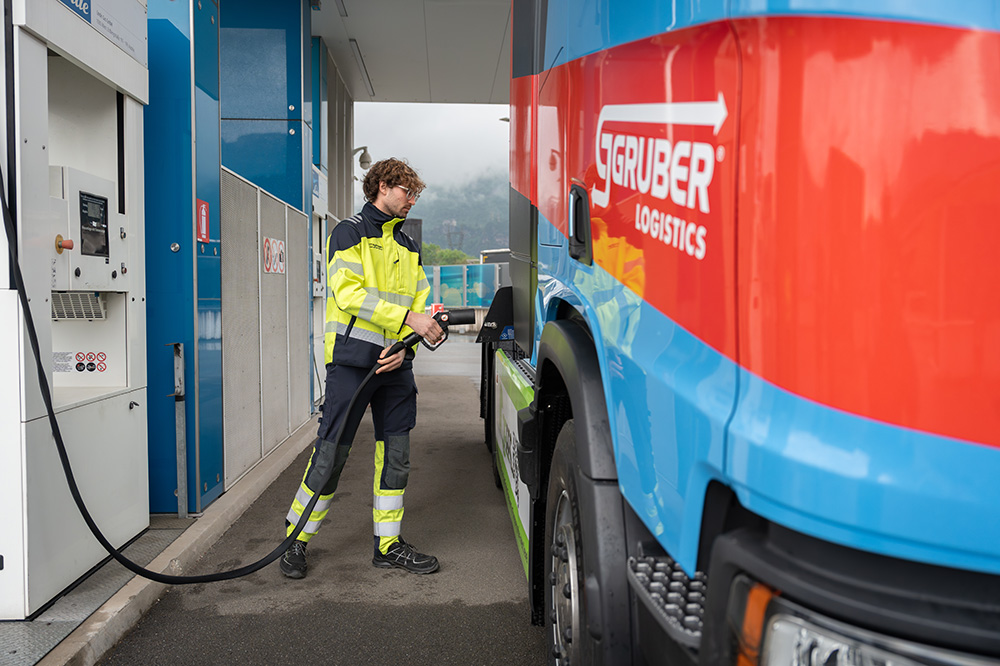
The vehicle combines battery-electric and hydrogen fuel cell technologies, enabling fast refuelling at 700 bar and delivering a driving range of up to 1,000 km.
The vehicle was prominently showcased at Transpotec Logitec 2026 (Milan, May 13th-16th), where Scania presented its latest innovations in sustainable transport. On Thursday, May 14th, during a dedicated press conference, Paolo Carri (Marketing & Driving the Shift Director at Scania) and Martin Gruber (CEO of Gruber Logistics) introduced the hydrogen truck alongside other Scania solutions, highlighting the progress achieved in bringing the technology from prototype to operational use.
“Our experience over the past few years has confirmed that the transition towards more sustainable transport cannot rely on a single technology alone; it requires the evolution of the entire ecosystem. At Scania, we have chosen to address this challenge through a multi-technology approach and a modular platform that enables us to develop different solutions in parallel, from battery-electric vehicles to hydrogen-powered transport, ensuring flexibility and resilience for the industry over the long term.
Our collaboration with partners such as Gruber Logistics demonstrates that innovation becomes possible when manufacturers, logistics operators, and institutions share a common vision. To ensure that the investments made today deliver tangible results tomorrow, it is crucial that the market continues to recognize and reward innovation, while the broader ecosystem evolves at the same pace as industry. Only then will technologies such as hydrogen be able to fully realize their potential in supporting the decarbonization of heavy-duty transport.” – Paolo Carri, Marketing & Driving the Shift Director, Scania
During the event, both companies emphasized the synergies between hydrogen and battery-electric technologies and the importance of introducing hydrogen solutions in the decarbonization process to address different use cases in the freight sector, underlining their shared vision of a diversified and resilient zero-emission transport ecosystem.
Towards large-scale zero-emission freight transport
The launch of hydrogen truck operations in Italy under ZEFES represents a critical step towards the wider deployment of zero-emission freight across Europe. By moving from pilot testing to real-world operations, Scania and Gruber Logistics are generating key insights into performance, infrastructure needs and operational integration.
This experience is directly relevant for the H2Accelerate TRUCKS project, where 35 units of the Scania 40 R Fuel Cell hydrogen truck are expected to be deployed, supporting the transition from demonstration projects to industrial-scale deployment.
More broadly, this initiative confirms the importance of strong collaboration between vehicle manufacturers, logistics operators and infrastructure providers to bring hydrogen solutions to market.
As Europe continues to pursue its climate objectives, projects like ZEFES and H2Accelerate TRUCKS are laying the foundations for the next generation of zero-emission freight transport, turning innovation into at scale operational reality.
H2Accelerate TRUCKS is co-funded by the Clean Hydrogen Partnership, the Research Council of Norway and the Swiss State Secretariat for Education, Research and Innovation.